A Calm Inventory Before Replacing a Household Item
A household replacement inventory helps you see what still works, what has failed, and the exact gap to solve before you start browsing.
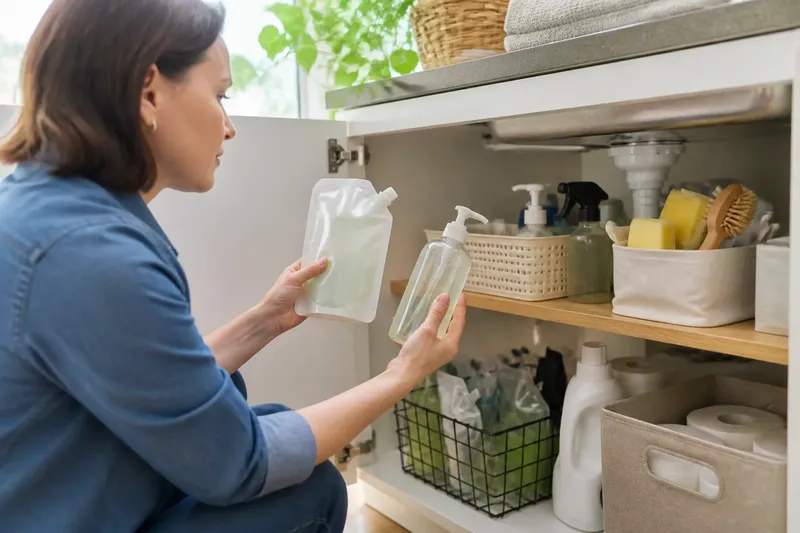
The common mistake with a household replacement is opening a shopping app before checking what is already in the cupboard. That can turn one missing item into a duplicate purchase, while the original problem—perhaps a broken lid or a tool that never fit the task—remains unclear. A calm household replacement inventory makes the decision smaller: list what is in use, note what has failed, then name the gap before looking at new products.
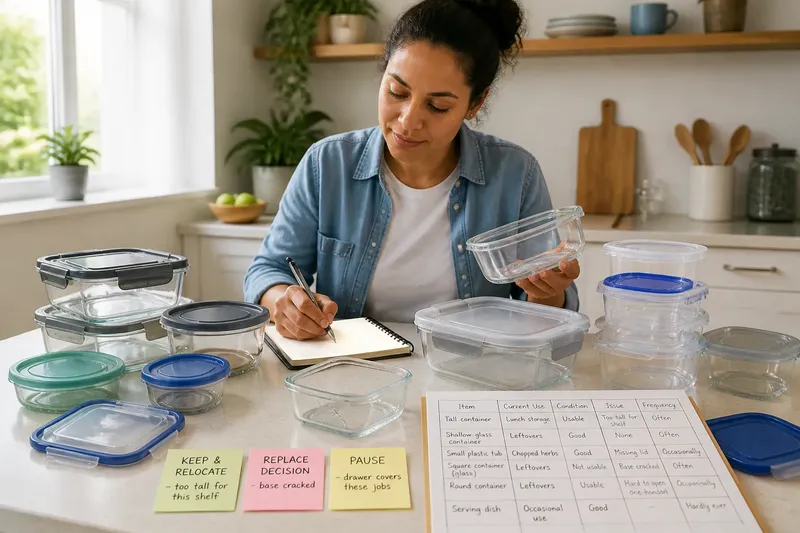
Imagine Maya setting aside a quiet afternoon at the start of a season to review the kitchen drawer where food containers collect. This is an invented situation, not a report of an actual household. She wants to replace a container she remembers as frustrating, but she begins by taking stock rather than shopping. The result she is aiming for is observable: a clear list of usable items, an honest record of the failure, and a specific reason to buy—or wait.
What should the inventory include?
Maya empties one drawer onto the counter and groups containers by what they do: lunch portions, leftovers, and small amounts such as chopped herbs. She does not need a perfect catalog. A note on her phone or a sheet of paper is enough, with a few columns:
- Item: describe it in ordinary terms, such as “shallow glass container” or “small plastic tub.”
- Current use: record what actually goes into it, not what she once intended it for.
- Condition: note whether it is ready to use, inconvenient, or no longer usable.
- Missing part or issue: write down a lost lid, a warped base, a difficult latch, or another specific problem.
- Frequency: note whether it is used often, occasionally, or hardly ever.
This is an inventory of the household’s working arrangement, not a count for its own sake. A container used regularly for leftovers is different from one kept because it came with a set. The distinction helps prevent an old purchase from being mistaken for a current need.
How can she tell what has actually failed?
Maya remembers disliking a tall container, but “I don’t like it” is too broad to guide a replacement. She checks what happens in ordinary use. Its lid is intact, but the shape does not fit the shelf where she stores lunch. Another container has a cracked base and cannot hold food reliably. Those are different problems: one is a mismatch, the other is a failed item.
She writes the observable issue beside each item instead of judging it as good or bad. “Too tall for this shelf” points toward a storage constraint. “Base cracked” describes a condition that may make the item unsuitable for its job. “Hard to open with one hand” identifies a usability problem, though it may matter only if that task comes up often.
For items that seem fine but are rarely used, Maya adds a question mark rather than labeling them useless. A seasonal serving dish may be quiet for months and still serve a clear purpose. Keeping uncertainty visible is more honest than forcing every object into a keep-or-replace decision on the spot.
What gap remains after the list?
Next, Maya looks at the occasions the existing containers need to cover. She thinks about packing lunch, storing a shallow leftover portion, and keeping a small ingredient in the refrigerator. Her inventory shows that she already has containers for all three. The inconvenience is narrower: the tall one does not fit her shelf, and the cracked one cannot be used.
She separates the gap from the product category. “Buy a new container set” is a shopping solution, not a description of what is missing. Her more useful note is: “I need a low-sided container for the shelf, and I need to decide whether to replace the cracked one.” That wording leaves room to rearrange the shelf, use another container she already owns, or buy only what the household truly lacks.
Say Maya moves the tall container to a deeper shelf and finds that it fits there. The expected observable result is that she can use it without buying a substitute. She still has the cracked container to consider, but she can make that decision on its own rather than bundling it with a broad replacement order.
What questions help before browsing?
Should I replace an item that is merely inconvenient?
First identify the inconvenience and how often it interferes with the item’s job. If a different place or existing item solves it, replacement may not address a real gap.
What if a part is missing?
Record the missing part separately from the item’s condition. A replacement part may be available, or the item may still work for another purpose; check the maker’s information when compatibility is uncertain.
How should I handle items I rarely use?
Note the occasion they serve and whether another household item can serve it instead. A seasonal need is not the same as a daily need, so frequency alone should not decide.
When is it time to browse?
Browse once you can describe the unresolved job, the limitation of what you own, and the features that would address that limitation. That gives you a reason to compare products beyond a familiar brand or an appealing bundle.
How does the exercise end with a useful decision?
Maya finishes with three distinct notes: keep and relocate the tall container, set aside the cracked one for a replacement decision, and pause on buying a full set because the rest of the drawer already covers its jobs. She has not made a purchase simply because one item annoyed her. She has also not assumed that every existing object deserves to stay.
For the cracked container, she can consider whether a replacement is needed for a task she still does, whether an existing item can cover it, and what practical qualities matter in her storage space. If she does shop, she can compare shape, closure, material, and care instructions against that specific need. Product labels and maker instructions can clarify use and care; requirements vary by product.
The seasonal review is useful because a household’s needs can shift while its cupboards stay crowded with old assumptions. Keep the notes brief, and revisit only the items tied to a real annoyance or failed job. A household replacement inventory earns its place when it gives you a clear reason to buy, repair, repurpose, or leave things as they are—and lets you close the cupboard without another guess.