What “Water-Resistant” Promises—and What It Leaves Unsaid
Water-resistant claims describe limited protection, not every wet situation. Learn what conditions to check before choosing, using, or caring for a product.
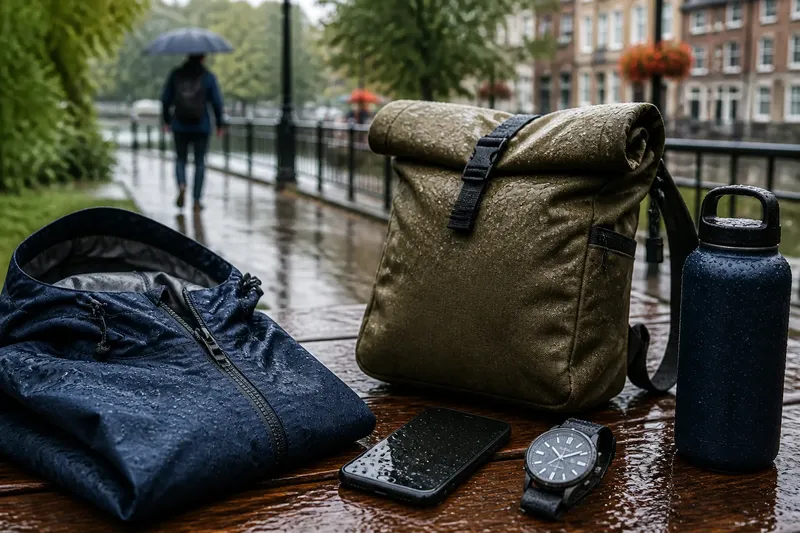
The common mistake with a water-resistant product is treating the phrase as permission to use it anywhere water might go. That assumption can leave a phone, jacket, watch, or bag exposed to conditions the claim never addressed. Water-resistant claims make sense only alongside their limits: what kind of contact is covered, under what conditions, and for which parts of the product.
If something has already been exposed to water, start by checking its instructions and the exact claim before trying to reproduce the conditions or use it again. “Water-resistant” is a broad performance description, not a universal promise. The useful question is not simply whether a product resists water, but what the maker says it resists.
Why does water resistance disappoint in everyday use?
A claim can sound broad while describing a narrow set of circumstances. A product may be intended to withstand splashes but not a sustained stream, or to tolerate brief contact but not remain wet. If the packaging gives no detail, the phrase alone cannot tell you which of those situations applies.
People often picture water as one consistent challenge. In practice, a few details change the exposure: whether water is sprayed or pooled, whether the product is moving, how long it stays wet, and whether pressure or temperature differs from ordinary conditions. A jacket caught in a passing shower and a jacket worn under a strong stream are both wet, but they are not the same use case.
The claim may also apply to only part of an item. A bag’s fabric could repel droplets while its zipper or seam allows water through. A watch may have a protected case but a charging connection or strap that needs different care. Look for wording that identifies the whole product, a component, or a specific use.
What usually causes a claim to be misunderstood?
Several clues can help explain why a product did not behave as expected. They are not proof of a defect; they point to details worth checking before deciding what to do next.
- The claim is treated as a rating. “Water-resistant” may appear without a test description, rating, or permitted-use statement. Read the nearby packaging and product page for a specific condition instead of assuming the phrase has a standard meaning for every product.
- A related term is mistaken for an equivalent one. “Water-repellent,” “splash-resistant,” and “waterproof” do not necessarily describe the same capability. The maker’s explanation matters more than a guess based on the word that sounds strongest.
- The exposure was different from the stated condition. A product described for rain may not be intended for soaking, washing, or forceful spray. Compare the actual event with the exact wording, including any limits on duration or use.
- A closure or opening was overlooked. A cap, seam, zipper, speaker opening, or port can be a weak point even when the main material sheds water. Check whether the instructions require covers to be closed or accessories to be removed.
- The product’s condition has changed. Wear, a damaged seal, a loose closure, or an unapproved repair may affect how the item handles water. Inspect for visible changes and follow the care guidance before relying on the original claim.
Match the wording to the situation before you blame the product or repeat the exposure.
What should you check before using a water-resistant product?
Start with the statement closest to the product itself: the hangtag, packaging, manual, or manufacturer’s product page. Look for the specific exposure named, any limits on use, and any conditions that must be met. If the product has a rating, find the maker’s explanation of what that rating covers rather than relying on the number alone.
Then check which parts are protected and what the product must be like for the claim to apply. A phone may need its port cover seated; a bag may need its roll-top closed as directed; a jacket may have care instructions that affect its water-shedding finish. If a label or manufacturer instruction controls, or local rules apply, follow that guidance rather than extrapolating from the broad claim.
Say you have a canvas day bag described as water-resistant and expect to carry it through a rainy commute. Before loading a tablet, you check the tag and find that it describes light rain, while the care card says the top closure must be rolled down fully. You use the bag with that closure secured and keep the tablet in its own sleeve; the observable result to watch for is whether the bag’s contents remain dry in the stated kind of rain, not whether the bag withstands every form of water exposure.
How should you respond after water reaches the product?
Do not assume that a product is safe to keep using just because the outer surface looks dry. First, stop the activity that exposed it and consult the instructions for drying, cleaning, or inspection. For an electronic device, avoid charging it while wet unless the manufacturer explicitly says that is safe; if there is damage or uncertainty, contact the maker or a qualified repair professional.
For clothing, bags, and other fabric items, follow the care label rather than applying heat or a coating on instinct. Some finishes can be affected by washing, detergent, or storage while damp. Let the instructions determine whether the item should air-dry, be cleaned in a particular way, or be examined before further use.
Keep the packaging or a screenshot of the claim if the difference between the stated condition and your experience is unclear. Note what exposure occurred and which closures were in place. That gives customer support a concrete question to answer: whether that use falls within the product’s described limits.
Which water-resistance questions are worth checking?
Does water-resistant mean waterproof?
No. The phrase alone does not say that a product can withstand all water exposure, or even that it can be submerged. Check for an explicit permitted-use statement and its limits.
Can a water-resistant item be used in the shower?
Do not infer shower suitability from a general claim. The maker may distinguish splashes, immersion, and water delivered under pressure, so look for wording that specifically covers the intended use.
Does a rating describe every part of a product?
Not necessarily. Instructions may identify protected components, required covers, or conditions for a rating to apply; check the product documentation for those details.
Does water resistance last for the life of the item?
The broad phrase does not specify how performance changes with wear, damage, or care. Check the maker’s maintenance guidance and inspect closures, seams, and seals for visible changes.
How can you compare two water-resistant products fairly?
Compare the stated conditions, not the adjectives. One product may explain how it handles a particular exposure, while another may use the same broad phrase without telling you much. A more detailed claim is easier to match to your needs, but detail does not make a product suitable for a use the maker excludes.
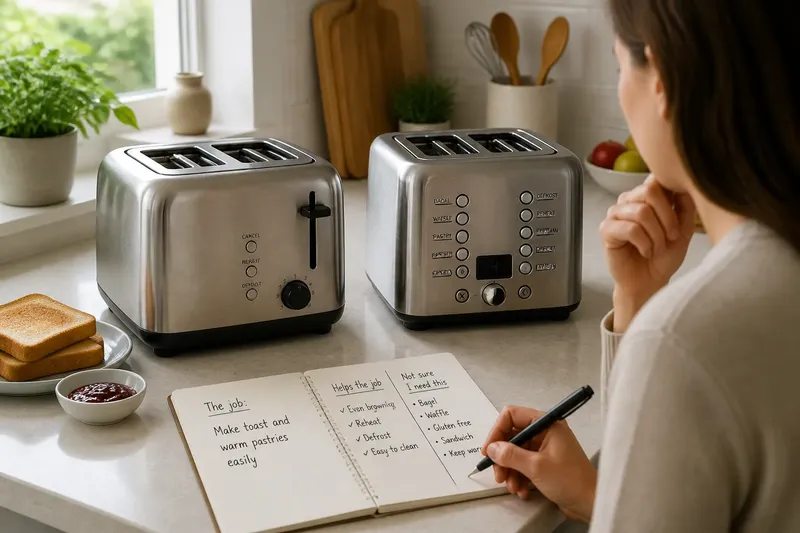
Write down the situation you need to handle in ordinary terms: light rain on a walk, splashes beside a sink, or damp gear in a backpack. Then compare each product’s instructions for that situation, including closures, care, and any excluded uses. If the descriptions do not answer the question, ask the manufacturer before relying on the item in a setting where water could damage its contents.
For water-resistant claims, the most useful detail is the boundary. Find the exposure the maker actually describes, check the parts and conditions it covers, and treat anything beyond that as unknown rather than implied.