The Small Print on a Product Label: Why It Became Part of the Package
Product labels combine instructions, disclosures, and persuasion. Learn how to separate their roles, find conditions that matter, and make a clearer choice.
The common mistake with a crowded package is to treat every line as decoration—or to assume every line carries the same weight. Product labels can combine a brand’s pitch, directions, and disclosures, and missing a condition beside a claim can leave you unsure whether the item suits your purpose.
Why do product labels say more than a name?
A package can identify an item, explain a use, present details, and make a case for choosing it. Which information appears, and how it is arranged, varies by product and location. Without a specific source, it is better not to tell a broad story about how or why labels developed over time.
For a shopper, the practical point is simpler: the package puts different kinds of messages in one place. Some help you identify what the item is; others describe how to use or care for it, disclose ingredients or materials, or highlight a claimed benefit.
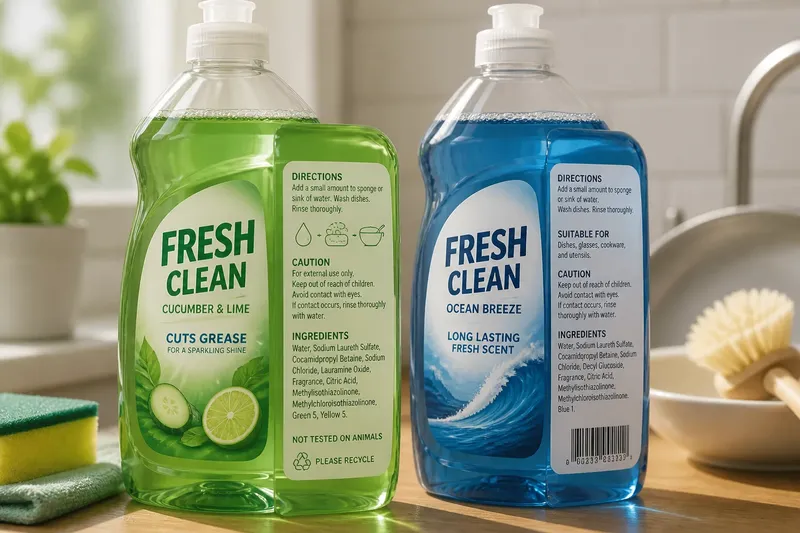
Imagine two household-cleaner bottles with similar names. One front panel emphasizes a scent, while its side panel gives directions and cautions. The front helps you recognize the product’s pitch; the side helps you decide whether and how to use it.
Read the package as several kinds of communication sharing limited space.
How does a package make its pitch?
Brands use color, lettering, illustrations, and brief claims to attract attention and distinguish products. A phrase may suggest a quality or intended benefit, but it may not answer every practical question.
For instance, “easy clean” may convey an impression, while the directions specify suitable surfaces and how to use the product. Those messages have different jobs. A claim is not a substitute for instructions.
Design also shapes what catches your eye first. A large brand name or bright icon can stand out while a qualification sits on a side panel. Prominence tells you what the package emphasizes, not necessarily what matters most to your decision.
Which label details inform, and which persuade?
Consider each part by its role rather than treating the entire package as one continuous statement.
- Product identity: The name and product type identify what the maker says the item is.
- Directions: Use instructions describe intended handling, application, or preparation.
- Disclosures: Ingredients, materials, care details, or other information may help you assess suitability.
- Claims: Benefit phrases emphasize a quality or intended advantage; nearby conditions may add context.
- Branding: Logos, colors, imagery, and tone build recognition and set expectations.
Some elements do more than one thing. An ingredient callout can inform you while also making the product appealing. A diagram can clarify use and give the package a friendly feel. Ask what each element is inviting you to believe or do.
Begin with the detail that answers your immediate question, then check for qualifications.
Why can useful details be hard to spot?
The front panel often gives space to the brand, product name, and selected claims. Directions, ingredient details, care information, and cautions may appear elsewhere, sometimes in smaller type. The arrangement varies from package to package.
Do not assume fine print is unimportant because it is hard to see. But do not assume every small line changes the meaning of a headline, either. Find the wording that bears on your decision and read the surrounding text for limits or conditions.
If the type is unreadable, look for clearer product information from the maker or contact the manufacturer. For a detail with meaningful health or safety consequences, avoid guessing and consult an appropriate qualified professional or authority.
How can you read a product label without getting lost?
Make a focused pass rather than trying to absorb every design element. The useful section differs for food, personal-care items, appliances, and cleaning products, but the basic habit is the same: identify your question, find the matching detail, and compare it with the prominent claim.
- Name the decision. If you need to know intended use, ingredients, care, compatibility, or a feature, identify that question before scanning.
- Find the matching section. If the front does not answer it, check the side and back panels; if the information is absent or unreadable, seek clearer details from the maker.
- Read conditions with the claim. If a qualification names a surface, setting, method, or audience, use that limit in your decision; if it remains unclear, do not assume the claim applies to your situation.
- Separate description from direction. If a benefit phrase does not tell you how to use or care for the item, follow the actual directions rather than treating the phrase as an instruction.
- Resolve unclear wording before relying on it. If fuller product information clarifies the wording, use that; if it does not, ask the manufacturer or consult a qualified professional when health or safety is involved.
Say you are choosing dish soap because the front says it is suitable for delicate items. You check the directions and find that they describe handwashing, then scan for a material-specific limitation. If the package names a limitation that applies to your item, you can rule it out; if no relevant detail appears, the label has not answered that question, so you can seek clearer guidance rather than treating the claim as a promise about every delicate object.
What questions help make sense of a product label?
Does small print always contain a warning?
No. It may contain directions, ingredients, care information, disclosures, or conditions attached to a claim. Read the heading and nearby wording to identify its role.
Is a front-panel claim the same as an instruction?
No. A claim highlights a product quality or intended benefit; an instruction tells you how the maker says to use or care for the item. Check both when the claim affects your planned use.
Why do similar products have different label layouts?
Brands make different design choices, and products can call for different information. Compare the details that matter to your decision instead of relying on a familiar layout or prominent badge.
What should you do if the wording is unclear?
Look for fuller directions or disclosures from the manufacturer, and avoid guessing about a condition that affects safe or suitable use. Rules vary by product and location, so consult a qualified professional or appropriate authority when health or safety is at stake.
What should you take from the label’s different roles?
A package may identify, instruct, disclose, and persuade at once, but those jobs are not interchangeable. Its most prominent message may not answer the question you have.
When you read product labels, follow the line that addresses your actual need and keep its surrounding conditions in view. That small pause helps you understand what the package says—and notice when it leaves a question unanswered.